
Case Studies
2 Hour Home Alone Window – For neurodivergent Adolescents – Case Study
Nov
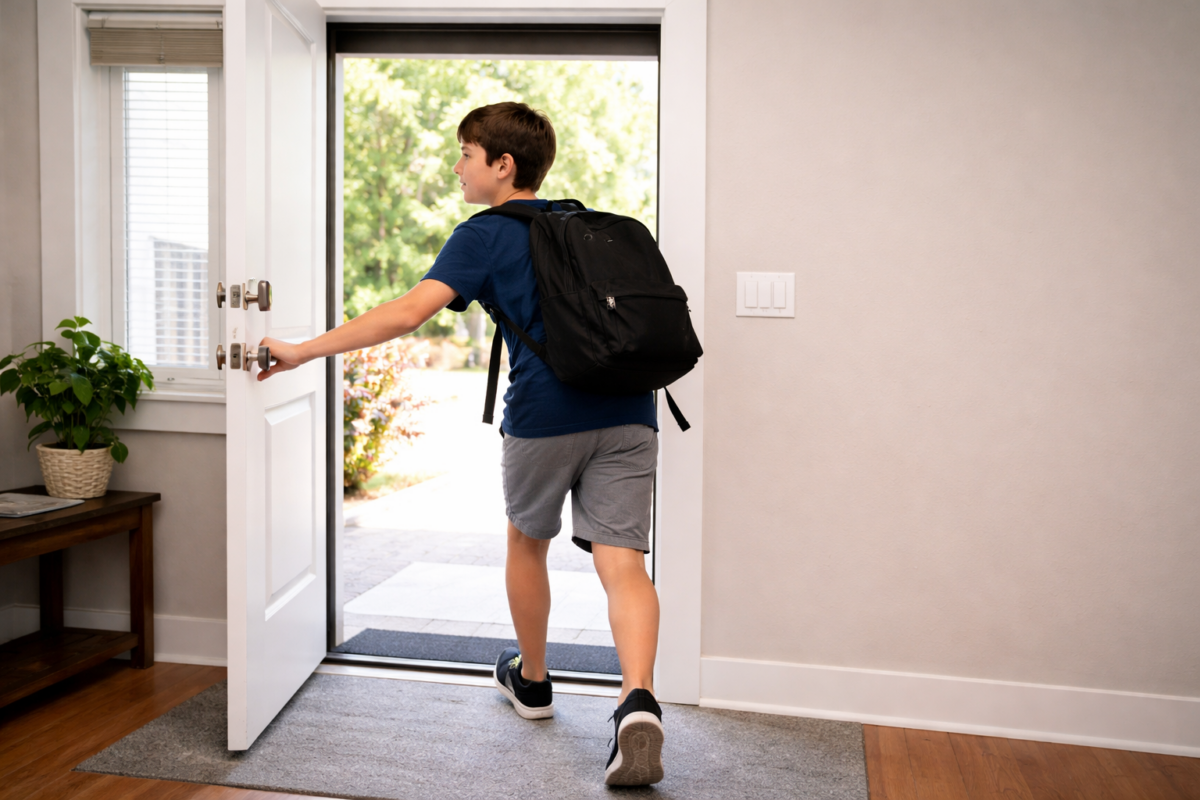
A mother works a short shift and is away from home for 2 hours. Her 15-year-old who is on the Autism Spectrum stays home, after school, usually watching TV in the living room. The parent’s core worry isn’t productivity or screen time, it’s about safety, reassurance, and peace of mind, knowing that if something unusual happens, she won’t be the last to know.
This is where Ethan AI was introduced, not as a replacement for supervision, but as a layer of support during a short, well defined home alone period. The goal was simple, to help the caregiver stay informed only when it matters, without constant check-ins or live monitoring. The system was configured to quietly observe a limited set of safety relevant patterns and to surface information only when a concerning behavior repeats or lasts long enough to indicate a real risk.
A Lightweight Home Setup The deployment was intentionally minimal. An existing indoor camera in the living room, already positioned to cover the sofa, television area, and the path toward the main door. The camera’s built-in microphone was sufficient to capture general audio cues, with no additional sensors required. Given that wandering was a potential concern, an optional second camera covering the hallway near the exit was added. No new intrusive hardware was introduced, and no changes were made to the home’s daily routine.
Home Alone Mode: Ethan AI was configured with a dedicated window, active only during the two-hours when the caregiver was away. The schedule was fixed. Monday through Friday, from 4:00 to 6:00 PM. Alerts were routed primarily to the mother, with a secondary caregiver added as a backup. If a notification went unacknowledged for a defined period, the system could escalate gently by notifying the backup contact.
The Privacy boundaries. Private areas such as bedrooms and bathroom entrances were masked. Only the living room and the immediate exit corridor were monitored. Access to data was restricted to the parent’s account, with clear logs and role-based permissions.
What Ethan AI Was Watching For Ethan AI was configured around a small set of caregiver defined, high-level behavioral categories, informed by the child’s history and the parent’s priorities. 1) These included patterns such as repeated movement toward the main door, lingering near the exit, or attempts to open it, signals that could indicate an exit-seeking behavior. 2) The system was also tuned to notice prolonged distress indicators, such as sustained crying or agitation loops combining pacing and repetitive gestures. In addition, 3) it monitored for unsafe interaction patterns specific to the home, like reaching toward restricted areas or repeated contact with hard surfaces, where relevant.
Where applicable, Ethan AI could also flag possible fall like events, described carefully as sudden drops followed by a lack of recovery movement over a defined duration. These were framed as observational cues and not definitive conclusions.
All thresholds were adjustable, reviewed with the caregiver, and designed to reduce false alarms.
When there is an alert triggered: Ethan AI’s confidence threshold is met for a possible exit-seeking pattern. A notification is sent to the mother: “Living Room: possible exit-seeking behavior observed.”
Depending on the family’s settings, the alert includes a brief visual snippet for context. The mother acknowledges the notification and chooses how to respond. Calling home, checking in via phone, or asking a nearby neighbor to step in.
The event is logged with a timestamp, creating a record that can be reviewed later.
Ethan AI does not replace supervision or human judgment. For this family, it meant fewer anxious check-ins, clearer visibility when something changes, and the reassurance that help will be prompted only when it truly matters.
Are you looking for a similar kind of support? Or do you want us to work on your specific case where you are unable to find help elsewhere?
Please reach out to us hello@ethanai.in
